Pensieri sulla Ferrari Luce
Maranello and Jony Ive’s LoveFrom, have revealed the interior of the Ferrari Luce, and unlike a typical reveal, this one has been especially interesting to study for both its aesthetic and functional merits. Unsurprisingly for an Ive-led collaboration, the mechanical detailing is exquisite, with a level of fastidiousness static imagery struggles to convey. The images don’t quite do it justice. To really grasp the fit and finish of these elements, check out this video review.
Below, I’ve collected my thoughts, broken out by component:
Steering wheel
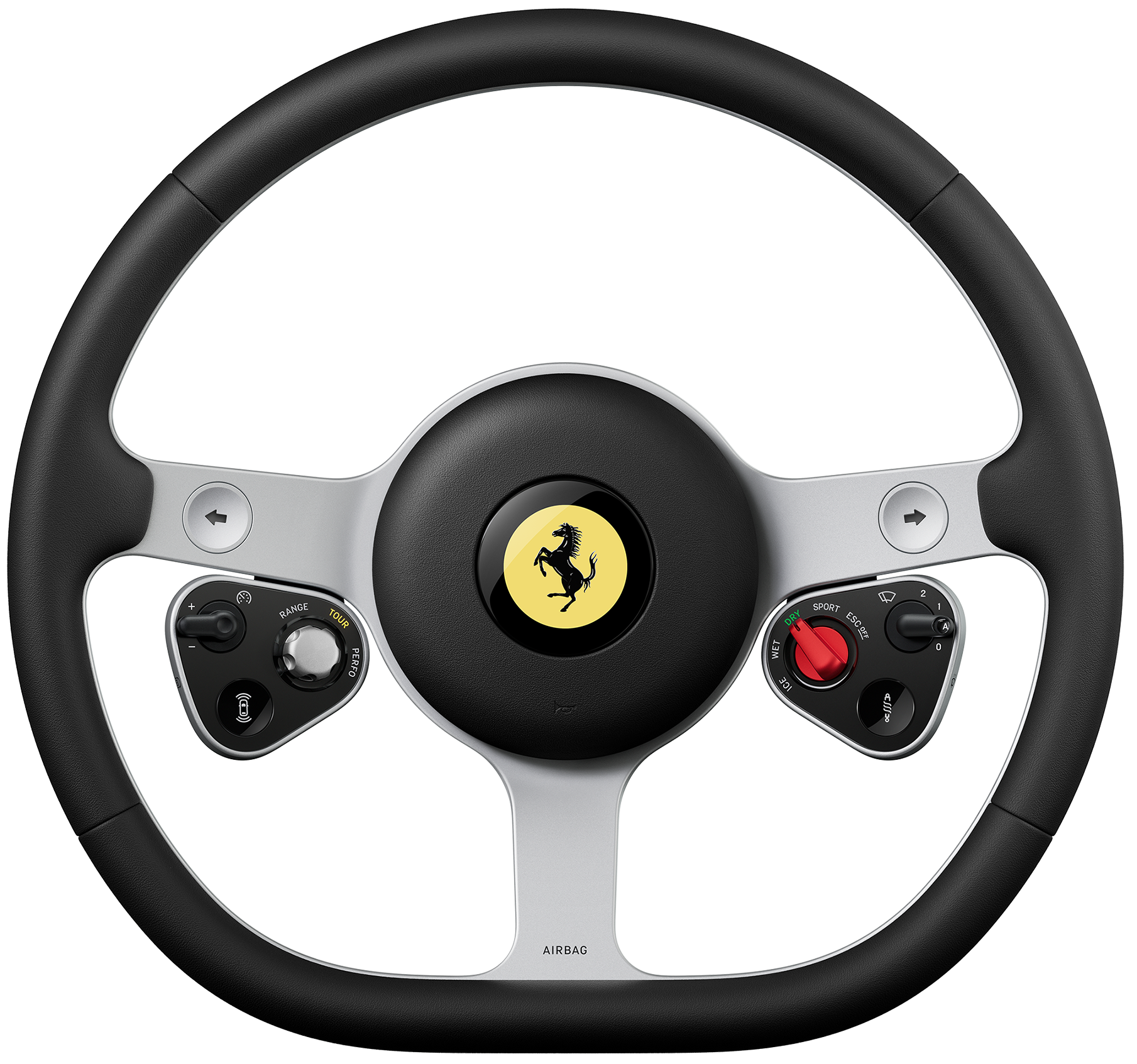
The little knobs and switches feel like they wandered in from an old UX parable about airplane cockpits: everything is shaped differently so your hand can identify a control before your eyes have even caught up. It’s a small, physical kindness. I’m especially curious whether the yellow on TOUR and the green on DRY are meant to signal that the rest of the text actually illuminates based on the current mode. If it doesn’t, “E-MANETTINO” is going to be the kind of thing you read once and then spend the rest of your life squinting for, right next to the blessedly legible MANETTINO.
I still hate the turn signals, though. Not the buttons, which are fine, but the arrow graphic they chose: it’s the default, font-packaged arrow that shows up everywhere, and it feels bizarre in a car that supposedly had enough discipline to commission its own typeface. Surely they have their own icon set. Why reach for the generic one here?
And then there’s the AIRBAG label, down at the bottom like an afterthought. Why is it there, and why does it need to say anything at all?
To be fair, there’s also a nice bit of “Ferrari can do this” in the material choices. Manufacturers rarely own much of the aftermarket because scale is unforgiving, but at this price point it’s charming that you can apparently customize the steering-wheel spoke color. The Appleness shines through: the sense that the object isn’t just engineered, it’s curated.
Binnacle
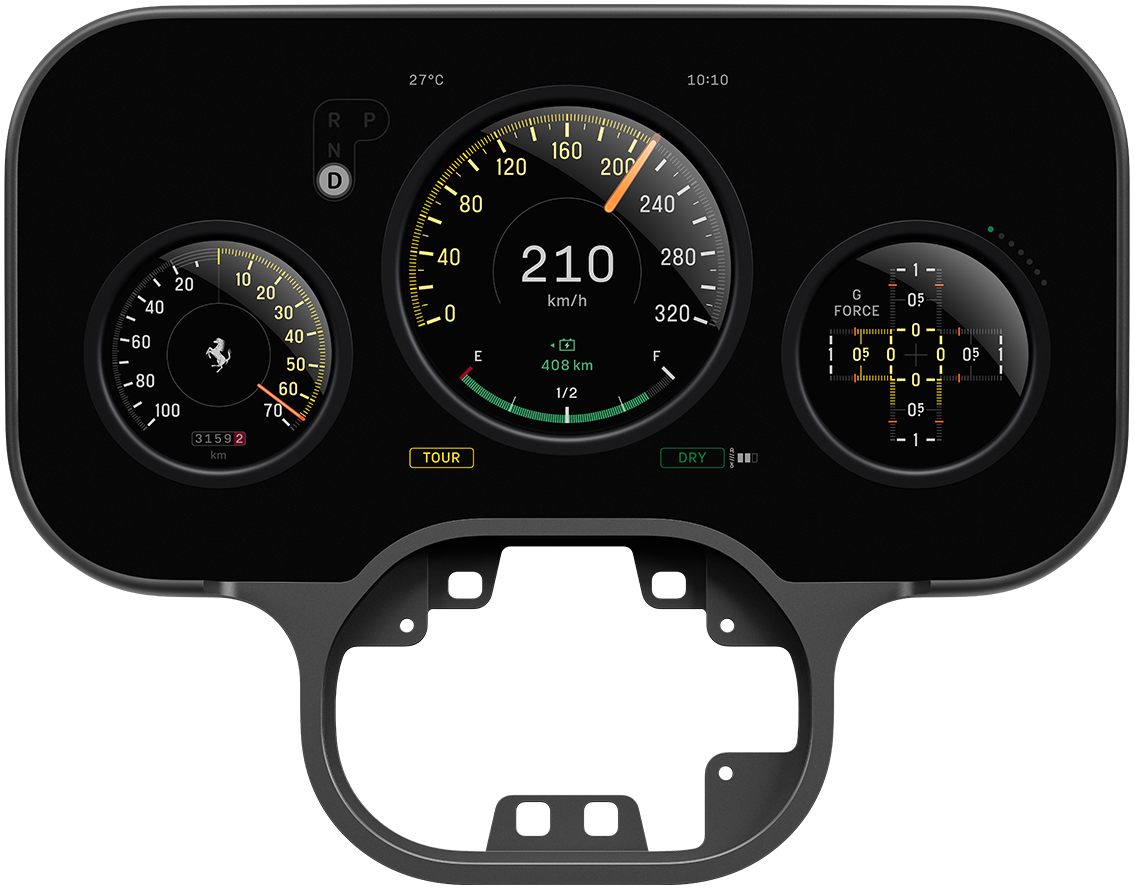
The binnacle is a clever compromise: multiple discrete screens that flirt with customization without tipping into the “one huge tablet, good luck” vibe. Constraints are underrated, and this is one of those cases where that limitation saves the whole interior from becoming a touchscreen showroom. It also means you don’t have to pave the steering wheel with a game controller just to navigate basic UI.
The color decisions mostly land for me, though DRY in forest green on black feels like it’s going to disappear in certain lighting. And the fact that the cluster moves with the steering column is genuinely great; it’s the sort of detail you only notice when it’s missing, and once you’ve had it, you don’t want to go back.
Control panel
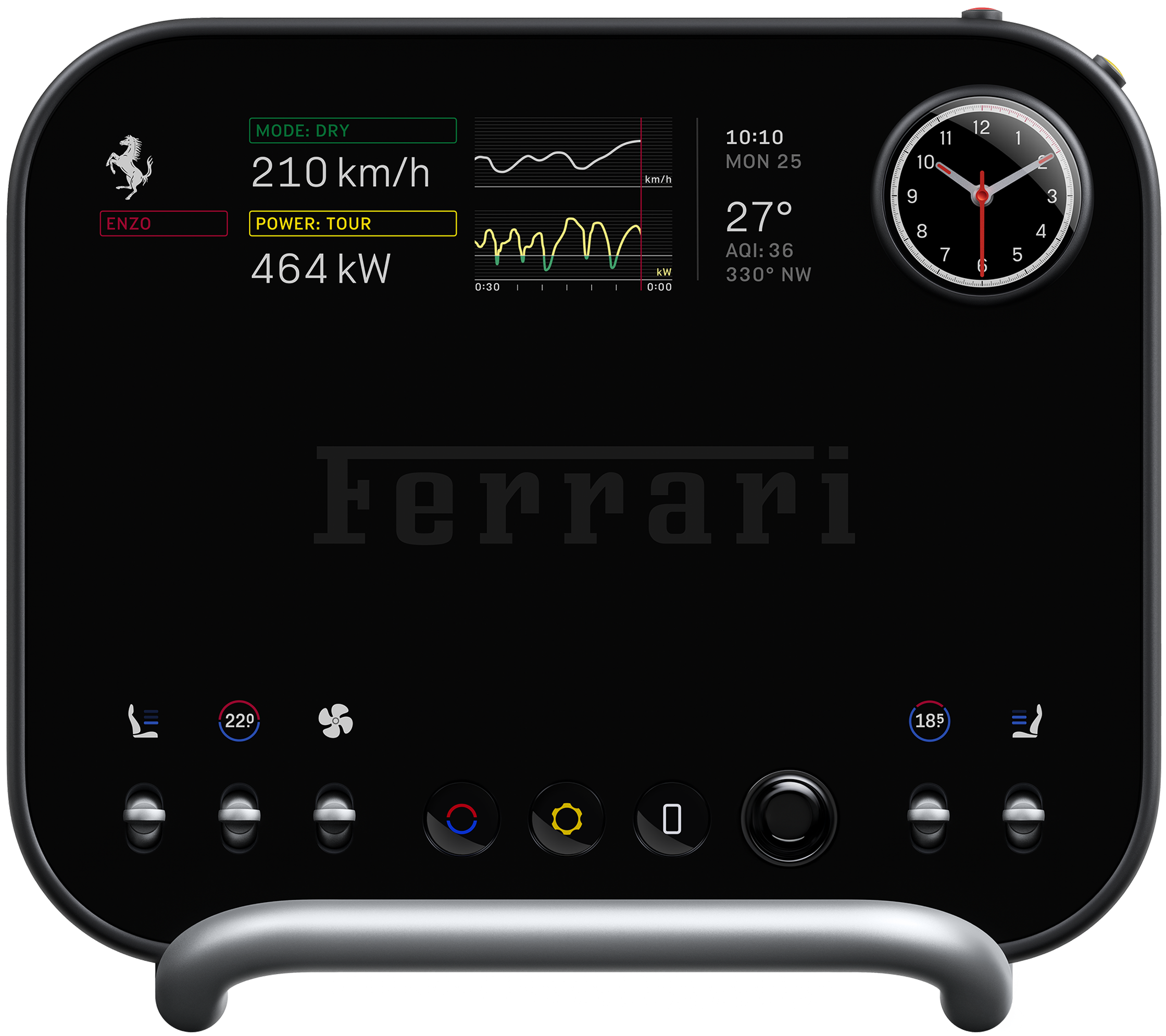
Looks like even with all of the design innovation here, we’re still in the same era: most interiors avoid designing bespoke control panels and default to the big-iPad solution. At this point, the tablet-first layout feels less like a design conviction and more like manufacturing inertia.
Still, the little buttons and toggles underneath are pure temptation; they make you want to reach out and try every control at least once. The layout feels like it was designed by someone who remembers that cars are operated with hands, not just eyes.
That bar hanging off the bottom, though, reads like a grab rail: the kind you install for an elderly relative so the bathroom doesn’t win. And I can’t stop thinking about the mechanics of that rotating screen. Even at moderate G-forces, it seems like you’d be putting a lot of stress on whatever is holding it in position. Maybe they’ve built in the same sort of lock steering columns use: free movement when you want it, a firm click when you don’t, and hopefully not “drops into your lap during the exciting parts.”
Multigraph, on the other hand, is a clever premium touch. I’d be surprised if we don’t see variations of it show up in Rolls and Bentleys soon.
Center console
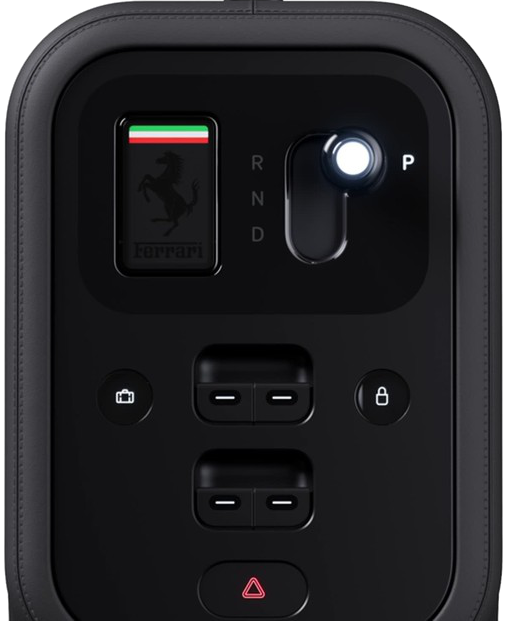
I like the key, but it has the same problem every smartphone competitor has: it invites the comparison, and the comparison is cruel. Why have a key at all? Isn’t the ultimate luxury that the car recognizes you the way your phone does, quietly and automatically, with some tiny NFC card in your wallet or just your presence? Give the thing Face ID and a little voice recognition and you’ve basically built JARVIS. Anything less starts to feel like “phone, but worse,” dressed up in leather.
The shifter is weirdly non-tactile for a car whose steering wheel suggests a very hands-on driving experience. Between the wheel controls and those performance-y binnacle dials, I expected something with heft, maybe a chunky aluminum gated shifter with enough mechanical theater to justify its existence. Instead it feels like the most important interaction has been politely sanded down.
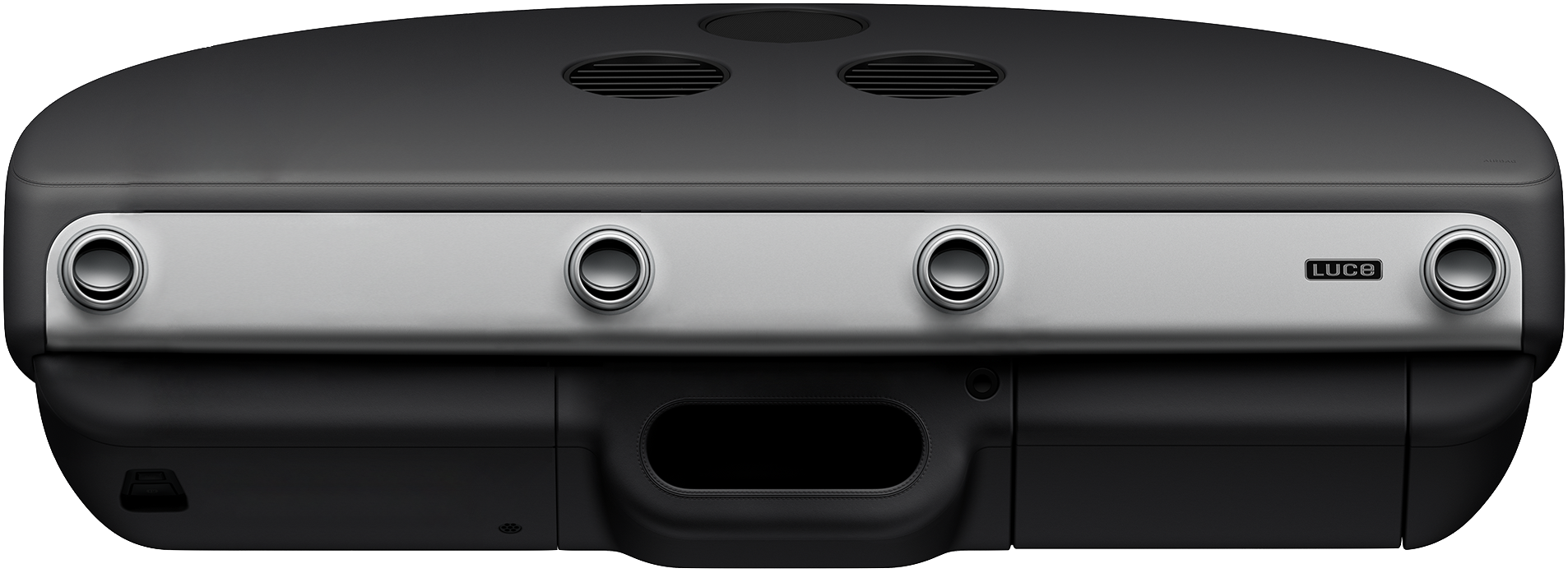
The rear screen is more of the same story as the front: an iPad plus switches.
Overhead control panel
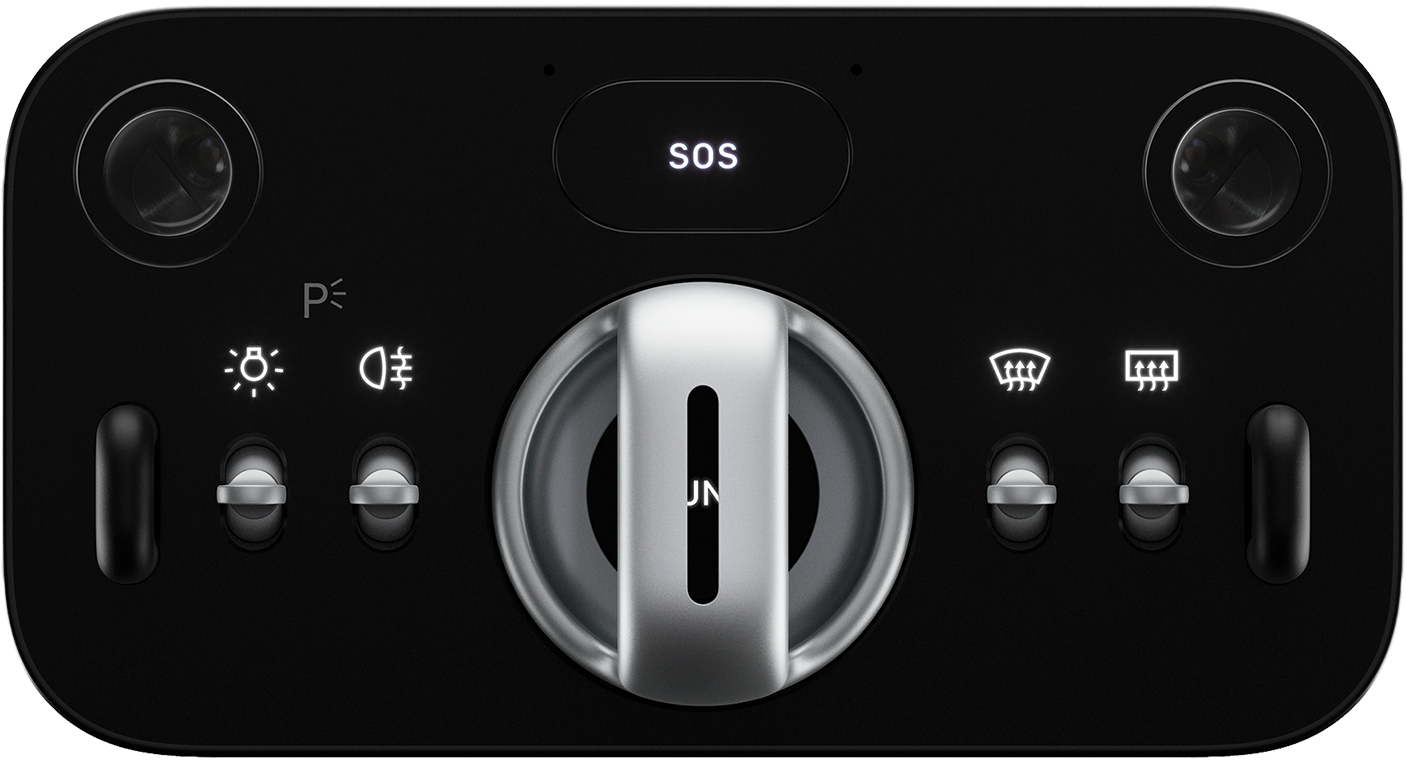
That launch-mode control is one of my favorite things in the whole interior. Overhead controls in performance and utility vehicles are always satisfying, like you’re arming something instead of just driving it. There’s obviously a separate SOS button, but I can’t help imagining a slightly more theatrical version where the knob rotates 90 degrees and becomes SOS. If you’re going to indulge the fantasy, go all the way: pull it like an eject handle and have every door and window blow open in an emergency.